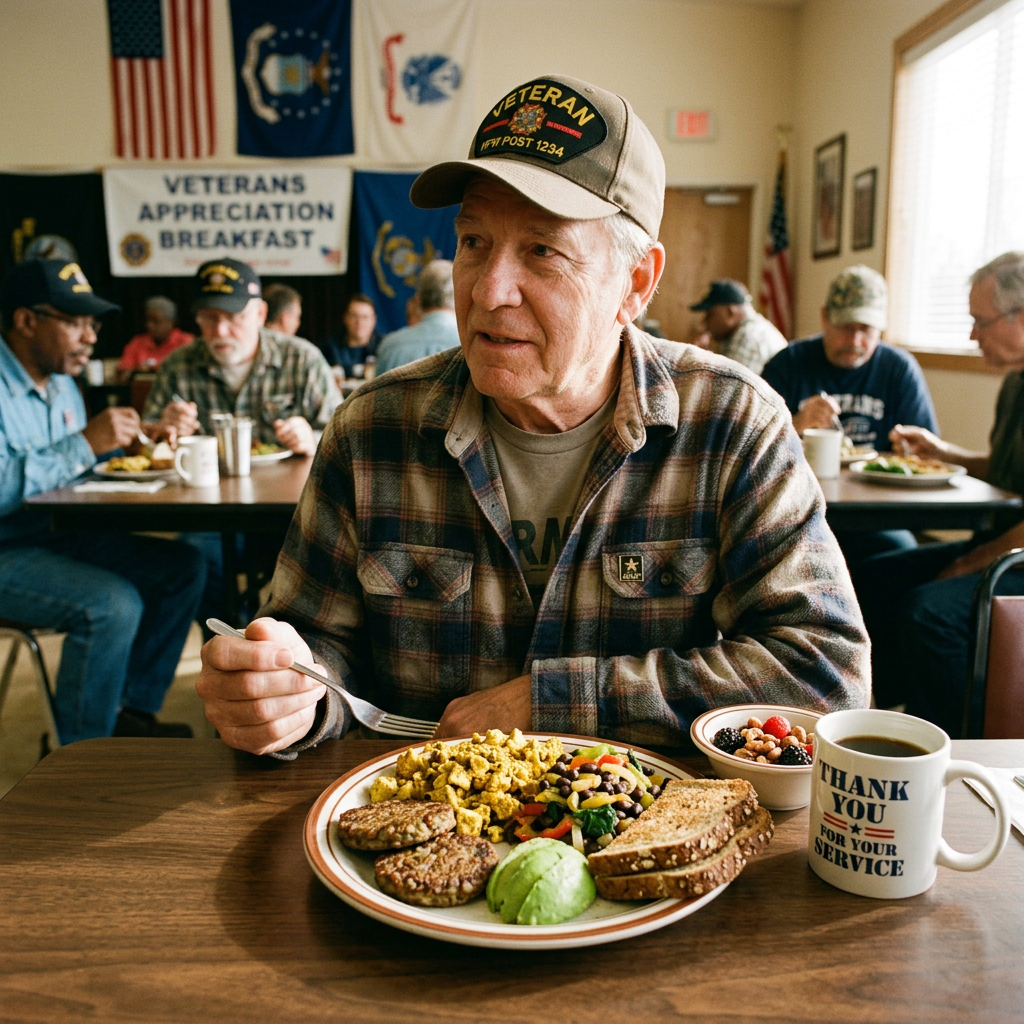
There’s a moment every morning when you decide how the day is going to go. For veterans, that moment hits harder than most people realize. We’ve lived through chow halls, field rations, and mornings where “breakfast” meant whatever you could shove down before stepping into the fight. Now we’re older, smarter, and trying to fuel our bodies with intention — but breakfast is still where many of us get ambushed.
And if you’re trying to eat more plant‑based? That’s where the mission usually collapses.
Most plant‑based breakfasts are light, sweet, and gone faster than a boot’s first paycheck. Smoothies, fruit bowls, cute oats — they taste good, but they don’t hold you. By 1000, you’re already hunting for calories.
But after digging through the intel, one thing is clear: Plant‑based breakfasts can absolutely deliver 20–30 grams of protein, real fiber, and sustained energy — without powders, supplements, or gimmicks.
This is tactical nutrition. Veteran‑approved. Mission‑ready.

Why Most Breakfasts Fail Veterans
It’s not just low protein. It’s the deadly combo of:
- Low protein
- Low fiber
- High glycemic load
That’s a blood‑sugar spike followed by a crash — the kind that hits harder when you’re dealing with chronic fatigue, inflammation, or the long-term wear of service.
The fix is simple: Protein + Fiber + Healthy Fats = Sustained Energy
Every breakfast below hits that formula.
THE 10 HIGH‑PROTEIN PLANT‑BASED BREAKFASTS
(Rebuilt for Veterans who need fuel, not fluff)
1. High‑Protein Chia Pudding
~29g protein | 23g fiber | zero cooking This one is a shocker. Hemp seeds + chia + high‑protein plant milk = a breakfast that hits like an MRE but without the sodium landmine. Five minutes of prep, overnight in the fridge, and it keeps you full for hours.
~29g protein | 23g fiber | no cooking required
Recipe: High-Protein Chia Pudding (No Protein Powder Needed)

2. Soy Yogurt Protein Bowl
20–24g protein | 8–10g fiber Most dairy‑free yogurts are weak, but soy yogurt carries its weight. Add chia, hemp, berries, and almond butter, and you’ve got a bowl that actually sustains you past morning PT.
Ingredients
• 1 cup unsweetened soy yogurt
• 2 tablespoons hemp seeds
• 1 tablespoon chia seeds
• ½ cup berries
• 1 tablespoon almond butter, optional
• Cinnamon, optional
Instructions
- Add soy yogurt to a bowl.
- Stir in chia seeds and hemp seeds.
- Top with berries, almond butter, and cinnamon if using.
- Let sit for 5–10 minutes so the chia can slightly hydrate.
Calories: ~360–430 | Protein: ~20–24g | Carbohydrates: ~24–30g | Fiber: ~8–10g | Fat: ~20–26g
3. Chia Mousse (4 Variations)
15–20g protein | 5 minutes Blended chia turns into a smooth, creamy mousse — no weird texture, no compromise. Top with hemp seeds or almonds and you’re easily hitting 20g of protein.
~15 to 20g protein depending on toppings | 5 minutes | no cooking
Recipe: Chia Mousse 4 Ways

4. Silken Tofu Chocolate Mousse
22–28g protein | dessert‑for‑breakfast energy Silken tofu blends into a rich, chocolatey mousse that tastes like you’re breaking the rules — but you’re actually fueling like a pro.
Ingredients
• 10 oz silken tofu
• 1 tablespoon cacao powder
• 1 tablespoon maple syrup
• ½ teaspoon vanilla
• Pinch of salt
• ½ cup berries
• 1 tablespoon hemp seeds
Instructions
- Add tofu, cacao, maple syrup, vanilla, and salt to a blender.
- Blend until smooth and creamy.
- Transfer to a bowl or jar.
- Top with berries and hemp seeds.
- Chill for 15–30 minutes if you want a thicker texture.
Calories: ~330–380 | Protein: ~22–28g | Carbohydrates: ~28g | Fiber: ~5–7g | Fat: ~16g
5. Overnight Quinoa Porridge
Quinoa + chia + flax + hemp = a protein stack that’s naturally gluten‑free and perfect for meal prep. Rotate flavors through the week so it never gets old.
Recipe: Overnight Quinoa Porridge
If You Prefer Savory (Most Veterans Do)
6. Southwest Tofu Scramble Quesadilla
25–30g protein Press the tofu, season it right, add black salt for that eggy flavor, and suddenly tofu scramble isn’t a compromise — it’s a weapon. Add potatoes, spinach, and soyrizo, and you’ve got a breakfast that eats like a field meal but fuels like a modern one.
~25 to 30g protein | gluten-free option available
Recipe: Vegan Breakfast Quesadilla with Southwest Tofu Scramble
7. Tempeh Breakfast Hash
28–32g protein | 8–10g fiber Tempeh is fermented soy — great for gut health and packed with protein. Crisp it with potatoes, peppers, onions, and greens, and you’ve got a skillet that sticks with you through the whole morning.
Ingredients
• 4 oz tempeh, cubed
• 1 small cooked potato, diced
• ½ bell pepper, chopped
• ½ small onion, chopped
• 1 cup spinach or kale
• 1 teaspoon olive oil
• ½ teaspoon smoked paprika
• ½ teaspoon garlic powder
• Salt and pepper, to taste
Instructions
- Heat olive oil in a skillet.
- Add tempeh and cook until golden.
- Add potatoes, bell pepper, onion, and spices.
- Cook until vegetables soften and potatoes crisp slightly.
- Stir in greens and cook until wilted.
Calories: ~430 | Protein: ~28–32g | Carbohydrates: ~42g | Fiber: ~8–10g | Fat: ~18g
8. Chickpea Flour Breakfast Wrap
11g protein per wrap Chickpea flour cooks fast, holds together like a tortilla, and delivers real protein. Make a batch, store them, and build breakfast burritos that reheat perfectly.
Ingredients To Make Chickpea Flour Wraps
- 2 cups chickpea flour (try to use finely milled, 100% stone-ground unroasted flour, often labeled as “besan” or “gram flour”)
- 1 ½ – 2 cup water, add more or less as needed
- ½ cup tapioca starch
- ½ teaspoon salt
Instructions
- Add the chickpea flour, tapioca starch, salt, and water to a high-speed blender or large bowl. Mix/Blend until a smooth batter forms. The consistency should be slightly thicker than crepe batter.
- Let the batter rest for 10–15 minutes. After resting, give it a quick stir. If the batter feels too thick, add a little water. If it seems too thin, add a small amount of chickpea flour.
- Heat a non-stick skillet or cast iron pan over medium heat and lightly grease it with your preferred cooking oil.
- Once the pan is hot, pour about 1/2 cup of batter into the center of the pan. Gently swirl the pan in a circular motion to spread the batter into a thin wrap.
- Cook for 1–2 minutes, until the surface looks dry and there are no wet spots remaining. Carefully flip the wrap with a spatula and cook for another about 1 minute on the other side.
- Repeat with the remaining batter. Serve the wraps warm or allow them to cool before filling with your favorite ingredients.
Chickpea Flour Wrap (per wrap, recipe serves 4)
Calories: ~260 | Carbohydrates: ~37g | Fiber: ~5g | Protein: ~12g | Fat: ~6g | Saturated Fat: ~1g | Cholesterol: 0mg | Sodium: ~300mg | Potassium: ~360mg | Calcium: ~40mg | Iron: ~2.6mg

If You Want Warm and Grounding
9. Savory Oatmeal Bowl
18–20g protein | 8g fiber Oats cooked in broth, topped with mushrooms, greens, nutritional yeast, and hemp seeds. This is the kind of breakfast that stabilizes your energy and your mood — something every veteran can appreciate.
Full recipe at Savory Oatmeal (Vegan)
~18 to 20g protein | ~8g fiber | gut-supportive | 15 minutes

10. Lentil Breakfast Bowl with Sweet Potato & Tahini
24–30g protein | 14–18g fiber Lentils for breakfast? Absolutely. Warm, grounding, and packed with minerals. This is “dinner for breakfast,” and honestly, it works better than most traditional morning meals.
Ingredients
• 1 cup cooked lentils
• ½ medium roasted sweet potato
• 1 cup sautéed spinach or kale
• 1 tablespoon tahini
• 1 tablespoon lemon juice
• 1 tablespoon pumpkin seeds
• Salt and pepper, to taste
Instructions
- Warm lentils, sweet potato, and greens in a skillet or bowl.
- Whisk tahini with lemon juice and a splash of water until creamy.
- Drizzle over the bowl.
- Top with pumpkin seeds.
Calories: ~480 | Protein: ~24–30g | Carbohydrates: ~62g | Fiber: ~14–18g | Fat: ~16g
The Veteran Advantage
These breakfasts aren’t just plant‑based — they’re strategic.
They stabilize:
- Energy
- Hunger
- Blood sugar
- Focus
- Mood
For veterans dealing with chronic pain, inflammation, PTSD, or sleep disruption, that stability is mission‑critical.
Plant‑based doesn’t mean weak. It means intentional. It means fueling your body like it still matters — because it does.





Leave a Reply