Field Notes – Observations
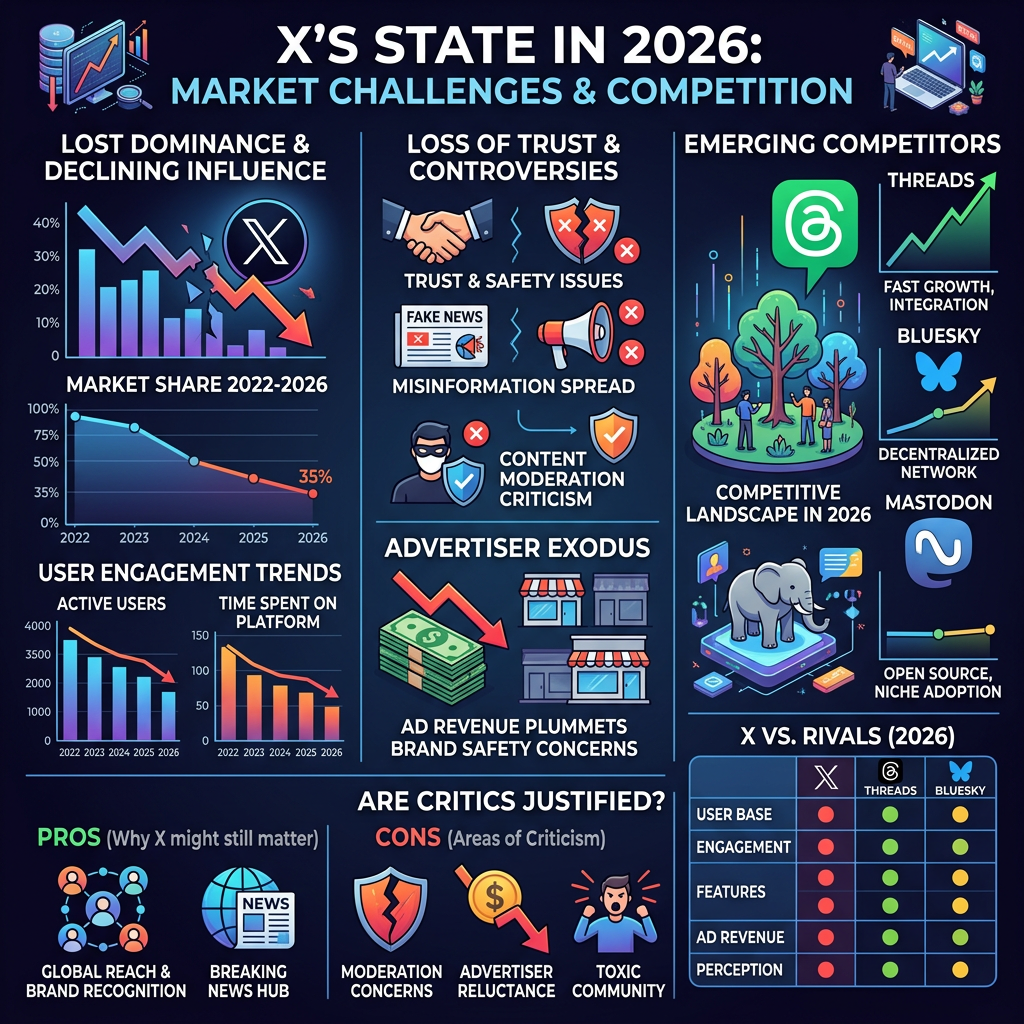
For years, “Twitter sucks” was a common complaint heard across the internet. Whether users were frustrated with censorship, trolls, bots, algorithms, or corporate decisions, the platform never seemed far from controversy. Since its transformation into X, the platform has changed dramatically, but many of the same criticisms remain. At the same time, X continues to play a major role in online discussions, breaking news, and public discourse.
So, does X still suck? The answer depends entirely on what you expect from social media.
The Biggest Complaints About X Today
Trust and Credibility Issues
One of the most frequent complaints from users is that X has become harder to trust. Changes to verification and moderation have made it more difficult for some users to quickly identify credible sources, experts, and official accounts. While supporters argue that the platform promotes open discussion, critics believe misinformation can spread more easily than in the past.
For users simply looking for reliable information, separating fact from opinion often requires more effort than it once did.
Algorithm Frustrations
Many users complain that X’s algorithm prioritizes engagement over quality. Controversial posts, arguments, outrage, and sensational content often receive significant visibility because they generate reactions.
As a result, some users feel meaningful conversations are drowned out by content designed primarily to provoke clicks, comments, and reposts.
Bots, Spam, and AI Content
Bots and spam have been among Twitter’s biggest problems for years, and many users believe the issue continues under X.
Common complaints include:
- Spam accounts flooding replies
- Cryptocurrency scams
- Fake giveaways
- Engagement farming accounts
- Large amounts of AI-generated content
- Automated political messaging
For many users, these distractions make it harder to find authentic conversations and genuine community engagement.
Subscription Pressure
Another criticism centers around X Premium and paid features.
Many users feel the platform increasingly rewards paying subscribers with greater visibility, enhanced features, and additional opportunities to earn revenue. Critics argue this creates a tiered system where users who choose not to subscribe may receive less reach and influence.
Content Moderation Controversies
Perhaps no issue generates more debate than moderation.
Some users believe X does too little to remove harmful content, harassment, and misinformation. Others believe moderation efforts still go too far and suppress legitimate discussion.
The reality is that neither side appears completely satisfied, leaving X caught in an ongoing struggle between free expression and platform safety.
User Experience Changes
Long-time Twitter users often argue that X simply doesn’t feel like Twitter anymore.
Changes to the interface, trending topics, recommended content, verification system, and overall culture have left some users nostalgic for the platform’s earlier years.
While new users may not notice the difference, veteran Twitter users frequently point to these changes as evidence that the platform lost part of its original identity.

Why People Still Use X
Despite these complaints, X remains one of the most influential social media platforms in the world.
Its greatest strength is real-time communication.
Breaking news, disaster updates, sports events, political developments, military conflicts, financial market reactions, and viral moments often appear on X before they spread elsewhere. Journalists, content creators, businesses, emergency responders, and public officials continue to rely on the platform because of its speed.
For many users, no competitor has fully replicated that real-time information ecosystem.
How X Competes With Other Platforms
The social media landscape is far more competitive today than it was during Twitter’s peak years.
Threads
Meta’s Threads has emerged as X’s largest direct competitor.
By leveraging Instagram’s massive user base, Threads attracted millions of users looking for a less controversial alternative. The platform generally offers a more advertiser-friendly environment and places greater emphasis on community discussions without the confrontational culture often associated with X.
However, Threads still struggles to match X’s dominance during major breaking news events.
Bluesky
Bluesky has become particularly popular among former Twitter power users, journalists, writers, developers, and technology enthusiasts.
Many users describe Bluesky as feeling closer to classic Twitter than X does. Its customizable feeds and user-focused approach appeal to people who dislike algorithm-heavy social media experiences.
While significantly smaller than X, Bluesky continues to attract users seeking a more conversation-centered platform.
Mastodon
Mastodon remains the leading decentralized alternative.
Instead of being controlled by a single corporation, Mastodon operates through independently managed servers. This structure appeals to privacy advocates and users seeking greater control over their online communities.
The tradeoff is complexity. Many casual users find Mastodon less intuitive than mainstream social media platforms.
Facebook and LinkedIn
While not direct competitors, platforms such as Facebook and LinkedIn increasingly absorb user attention that once belonged to Twitter.
Facebook remains a hub for communities and personal connections, while LinkedIn dominates professional networking and industry discussions. Both platforms have become important alternatives for audiences who no longer view X as their primary destination for information and engagement.
So, Does X Still Suck?
The answer depends on what you want.
If you’re looking for instant access to breaking news, real-time reactions, and fast-moving public conversations, X remains one of the most valuable platforms available.
If you’re seeking a quieter environment with fewer controversies, less algorithmic amplification, and a stronger sense of community, Threads, Bluesky, or Mastodon may offer a better experience.
What is clear is that X is no longer the uncontested digital town square it once was. It now operates in a market filled with viable alternatives competing for users, creators, advertisers, and attention.
X hasn’t disappeared. It hasn’t been replaced. But it is no longer alone.
The platform continues to evolve while facing ongoing challenges involving trust, moderation, bots, advertising, subscription models, and growing competition. Whether X has improved or declined since the Twitter era largely depends on which side of those debates you stand.




Leave a Reply