
Most veterans leave service with a refined ability to read environments. Years of training and operational experience teach that threats rarely appear as pure chaos. Opportunistic crime follows a calculated pattern: the highest reward for the lowest effort, risk, and resistance. Predators scan people, vehicles, and properties the same way an intelligence analyst scans a battlefield for indicators. They look for signals of awareness, capability, predictability, and vulnerability. The difference is that in civilian life those signals are often broadcast without the sender realizing it.
In public spaces the clearest indicators involve attention and presence. Walking with eyes locked on a phone, headphones sealing out ambient sound, or posture collapsed inward projects delayed reaction time and narrow focus. Irregular pace or a lost, uncertain demeanor can further suggest reduced capacity to respond. Veterans are trained to move with purpose, head up, scanning naturally without appearing aggressive. That disciplined presence alone often shifts perception. It communicates that the individual is not asleep inside their own environment and would make an approach more complicated. The contrast between distracted movement and purposeful awareness is frequently enough to move someone down a predator’s selection list.
Visible valuables raise the reward side of the equation, but only when paired with low perceived resistance. An alert person carrying value is routinely bypassed for someone showing less wealth but far less awareness. Body language that signals hesitation, disorientation, or impairment further tilts the calculation. Veterans understand that perception drives selection more than raw physical strength.
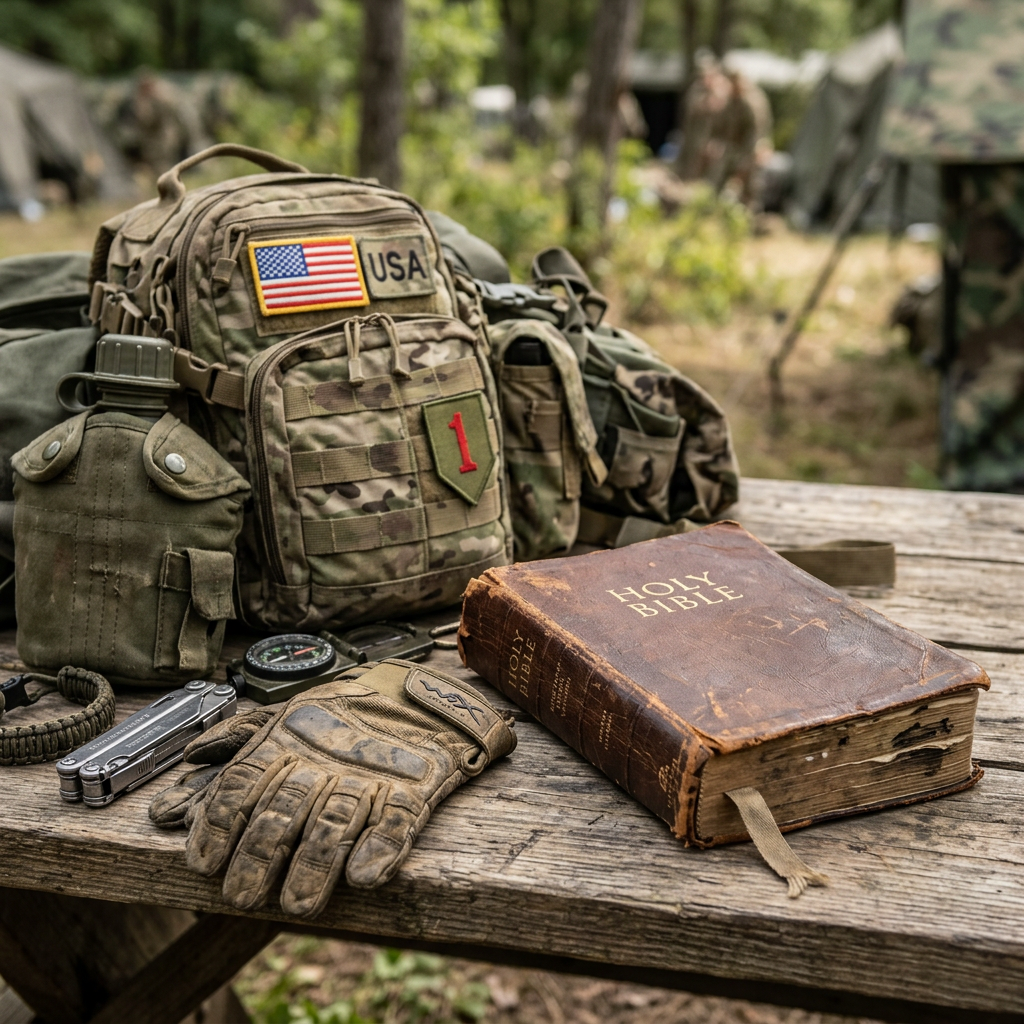
Vehicles function as mobile profiles. Items left in plain sight through windows remove guesswork for anyone testing opportunities. Unlocked doors eliminate friction entirely—many predators simply walk parking areas sampling handles for zero-resistance targets. Stickers, unit logos, or other identifiers can also reveal routines, family details, or affiliations that help build a longer-term picture of when a vehicle or residence is likely unoccupied. What once served as unit pride or camaraderie can become part of a surveillance profile if left unexamined.
Homes introduce time into the equation. Unlike a quick street encounter, a residence can be observed over days or weeks. Absence of visible security measures—cameras, alarm signage, motion lighting—lowers perceived detection risk. Darkness provides cover. Overgrown landscaping creates concealment for approach and entry-point work. Tools or sporting equipment left accessible can become improvised aids. Piles of mail, unattended packages, or trash that announces recent high-value purchases all signal occupancy patterns or contents. Unlocked doors, open windows, poorly secured garages, or pet doors further reduce complexity. Predators prefer the path of least resistance; each of these factors shortens that path.
The practical response for veterans is not to turn every home into a hardened military position. It is to stop ranking among the softest options. The same observational discipline used in service applies: maintain presence with head up and occasional environmental scans. Keep high-value items out of easy view. Lock vehicle doors as routine, clear the interior of visible bags and electronics, and prefer well-lit parking when possible. At home, introduce modest uncertainty—visible cameras or signage, motion-activated exterior lights, trimmed landscaping that maintains sight lines from the street, and the removal of accessible tools. Timers on lights or devices can disrupt the appearance of predictable absence. Neighbors who notice anomalies, especially within veteran communities that already share a culture of mutual watchfulness, raise the collective cost of operating in an area.
None of these steps eliminates risk. They change relative attractiveness. Predators do not require a perfect opportunity; they require an easier one. When small, consistent adjustments raise the effort and uncertainty involved in selecting a veteran or their property, many simply move on to clearer signals elsewhere. The skills are already there. Applying them deliberately in daily civilian life rewrites the indicators being broadcast and keeps the path of least resistance pointing somewhere else.




Leave a Reply