
Mind/Philosophy Notes
Folks love asking what you want out of life. It’s a clean question. Sounds ambitious. Looks good written on a dry-erase board in some transition class. I’ve sat through enough briefs, counseling sessions, and 0200 talks on a bunk to know that question doesn’t get you very far.
Wanting is cheap. Everybody wants something. A better job. A quieter house. A body that doesn’t bark when the weather turns. Wanting doesn’t cost you a damn thing until the bill shows up, and by then most people have already piled so much on the list that they can’t tell the mission from the extras.
The better question is what you’re willing to give up.
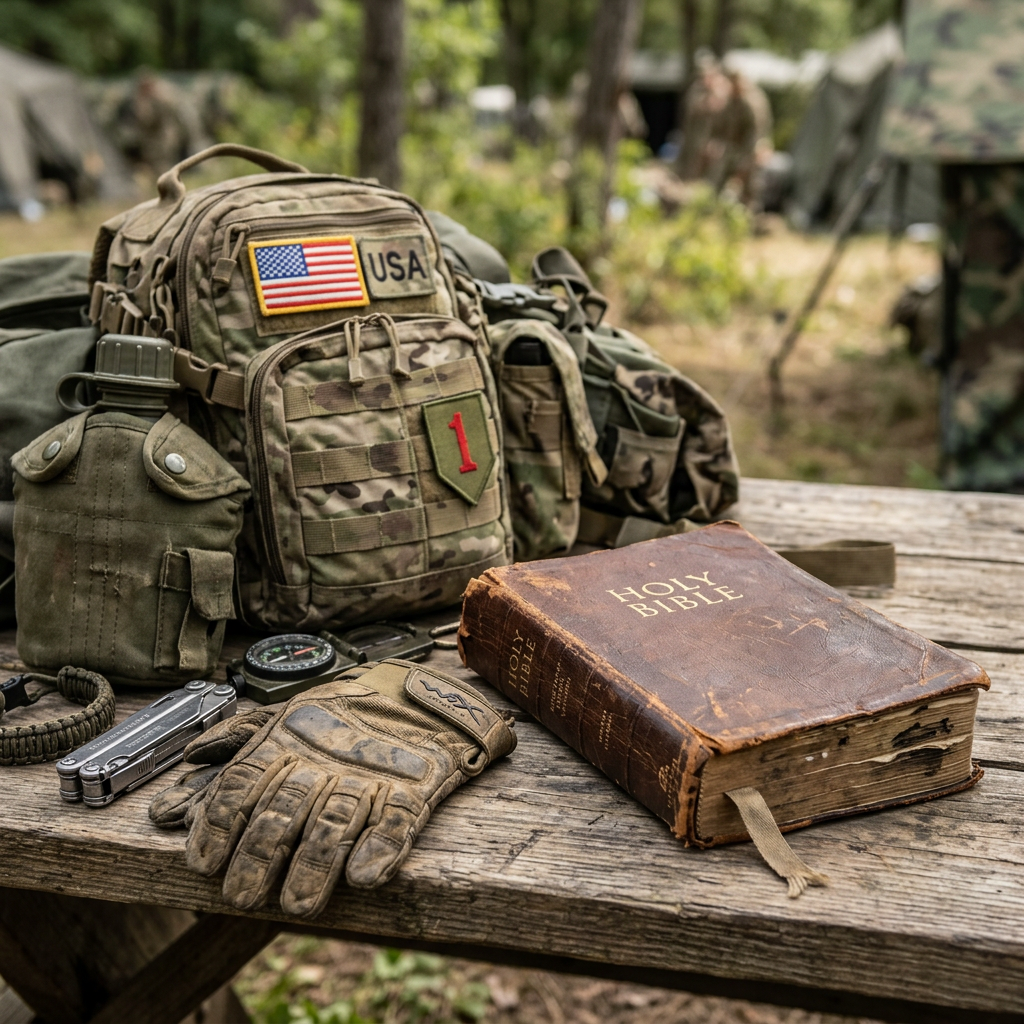
That’s how we actually made decisions in the service, whether anybody said it out loud or not. You didn’t get to keep every comfort and still make movement. Weight had a vote. Time had a vote. The truck had a schedule. Something came off the packing list. You learned what was essential because the rest of it stayed in the connex, got mailed home, or never made it into the ruck in the first place.
Wanting never packed the bag
Civilian life sells the opposite story. More options. More goals. More versions of yourself you could become if you just visualized hard enough. I tried that after I got out. Bought the planner. Wrote the goals. Told myself I was going to be three different men by Christmas.
I was busy as hell and not pointed anywhere.
A packing list will humble you faster than a vision board. You can want a cot, a second pair of boots, the good snacks, the extra magazines, the stupid little comforts that make a long stretch feel human. Then somebody says you’re walking farther than you thought, or the bird only takes so much, or the room in the house you just rented doesn’t have space for the version of you that kept everything “just in case.”
Then you find out what you actually believe.
Not what you posted. Not what you told your first sergeant or your spouse or the guy at the VFW who asked what you were doing now. What you believe is whatever still has a place when something else has to go.
The last thing you won’t put down
If you strip a life down far enough, most of the noise falls away. Pride goes. The hobby you only kept because you used to be good at it. The friendship that turned into a chore. The job that pays just enough to keep you too tired to look for a better one. The late nights that used to feel like freedom and now just feel like a hangover with a story attached.
You can give those up and still be yourself. Some of them you should have given up years ago. They aren’t adding value. They’re taking space. They’re eating sleep. They’re making you short with the people who actually stayed.
Keep going. Keep setting things down.
There will be a point where you hit something you will not drop. Not because a quote told you to hold the line. Because the thought of leaving it makes your stomach turn in a way that isn’t drama. It’s recognition.
That thing might look small from the outside. Your kids’ weekends. A trade you actually respect. A promise you made in a place that didn’t have room for pretty speeches. Sobriety. A church pew. A workshop. A stretch of road you run before the sun’s up because that’s the only hour nobody owns but you.
It might look large. A marriage you intend to stop treating like an afterthought. A skill you bled to learn. Service of a different kind, the kind that doesn’t come with a uniform and still asks something of you every week.
I don’t know what yours is. That’s the point. I only know you won’t find it by adding more wants to the pile. You’ll find it when you’re honest about the last item you refuse to leave on the floor.
Give up what isn’t paying rent
There’s a difference between a hard thing and a useless thing. People mix those up and then call every loss “sacrifice,” which is a word that used to mean something.
Sacrifice is giving up a good thing for a better one, or a present comfort for a future you can live with. Dead weight is just dead weight. You don’t get a medal for hauling it.
Look at your week like you’d look at a layout before a movement. Not the story you tell about your week. The actual hours.
What gets your best attention? What gets the leftovers? What do you defend when somebody asks you to change it? What do you give up the second it gets inconvenient? That last one will tell on you. We all have a thing we claim is important and then trade the first time a screen lights up or a buddy says come out.
If it isn’t adding value, set it down. Value doesn’t have to mean money. It can mean peace. Health. A cleaner conscience. A house that doesn’t feel like a storage unit for old versions of you. It can mean you stop rehearsing a grievance that’s been paid in full and still sitting in the living room like it pays rent.
I knew guys who could field-strip a rifle in the dark and couldn’t throw away a shirt from 2009. I was one of them for a while. The uniform came off. The habit of holding gear “in case” did not. Turns out a garage full of just-in-case is just another kind of rucksack, except nobody told you when the march was supposed to end.
Direction is a subtraction problem
People talk about finding themselves like the self is lost in the woods and if they buy the right book they’ll trip over it. Most of the time the self isn’t lost. It’s buried under obligations you never agreed to out loud.
You said yes because it was easier than disappointing somebody. You stayed because leaving required a conversation. You kept the old loop going because it was familiar, and familiar feels like safety when you’ve already had enough surprise for one lifetime.
Direction starts when you stop asking, “What else can I take on?” and start asking, “What am I done carrying?”
That second question is rude. It doesn’t flatter you. It doesn’t care that you used to need the thing. It only cares whether the thing still earns its place.
I don’t mean burn your life down for the aesthetic. I’ve watched people confuse destruction with change. They quit the job, the town, the marriage, the friends, and six months later they’ve built the same camp in a new zip code. Subtraction without a standard is just restlessness.
The standard is simple, and it isn’t gentle: if I had to move at dawn, would I take this with me? If the answer is no, it does not get to keep running your calendar.
What the service taught that the brochure left out
They taught us how to move as a unit. They taught us the packing list, the timeline, the brief. What they didn’t always say — because they didn’t have to — is that clarity comes from constraint.
You knew the mission because a lot of other missions were not on the table. You knew your lane because wandering out of it got people hurt. You knew who you were in that formation because the job was visible. It had a start time. It had a standard. It had somebody who would notice if you half-stepped.
Then you get out, or you stay in long enough that the mission changes and nobody hands you a new one that fits as tight. Suddenly you can be anything. That’s supposed to feel like freedom. Some days it does. A lot of days it feels like standing in an empty bay with too many duffels and no packing list.
So you make one.
Not a five-year plan with colored tabs. A short list of what you will not abandon, and a longer list of what you’re done pretending you need. The first list is your direction. The second list is how you make room to walk that way without limping.
A working test, not a speech
If you want something you can use before the sun goes down, try this. It isn’t pretty. It works.
Write down the five things you say you care about. Be honest, not impressive. Then look at the last thirty days and mark which of those five actually got blood, time, or money. Not intention. Receipts.
Now write the five things that ate the week anyway. Scrolling. Drift. A person who only calls when they need a ride or an audience. A habit that used to take the edge off and now just takes the morning. A job task you hide inside because it lets you avoid the work that would actually move you.
Give up one thing from the second list this week. One. Not the whole personality. One item that is not adding value. Put it down long enough to feel the space it leaves.
Then look at the first list again. Which item would you still carry if you could only keep one? That’s the heading on the map. You don’t have to tattoo it on your neck. You do have to stop starving it while you feed the junk.
If that one thing scares you a little, good. Fear of losing the right thing is different from fear of work. You can tell them apart if you sit still for ten minutes and don’t reach for a distraction like it’s a smoke in the wind.
Keep the thing you’d carry at dawn
I used to think direction would arrive like orders. Clear. Timed. Stamped by somebody who had the picture I didn’t. Sometimes you get that. A good leader. A good spouse. A doctor who tells you the truth. A friend who is sick of watching you lie to yourself.
Most days you don’t. Most days you get a quiet room and a decision about what still deserves a place on your back.
Think less about what you want. Wanting will talk all night. Think about what you’re willing to give up, and then give up the thing that has been riding for free. Keep doing that until you hit the item you will not put down.
That last thing — the one you’d still grab if the truck was leaving in ten minutes — that’s not a motivational line. That’s your heading.
Walk that way. Leave the rest. You already know how.



Leave a Reply