When veterans hand their information to the Department of Veterans Affairs, they expect it to be protected with the same seriousness that service members protect each other in the field. But a recent Government Accountability Office (GAO) report shows that VA’s digital infrastructure — from software licenses to sensitive personal data — is nowhere near secure enough.
That’s why The American Legion stepped into the fight.
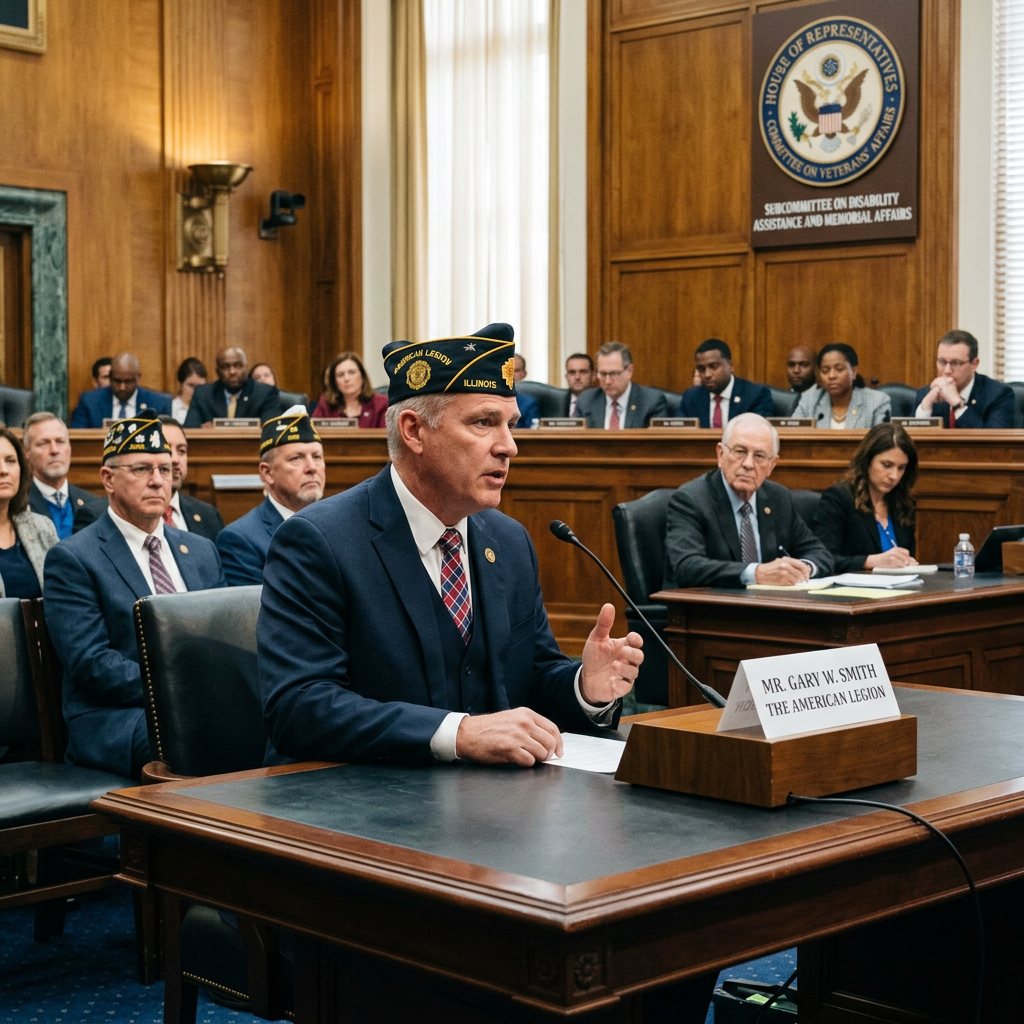
On March 25, American Legion Legislative Director Cole Lyle delivered in‑person testimony before Congress, urging lawmakers to tighten oversight of VA’s software systems and safeguard veterans’ personal information. His message was clear: the VA’s current digital management practices are unacceptable, and Congress must act.

A $21 Billion Problem: VA Can’t Track Its Own Software
The GAO report revealed that VA spent roughly $21 billion on software licenses and systems between fiscal years 2022 and 2024 — yet still cannot accurately track how many licenses it actually uses.
Lyle called this out directly, describing the situation as a glaring failure in accountability and oversight.
To address it, lawmakers introduced H.R. 6654, the Veterans Affairs Management and Oversight of Software Assets Act, which would:
- Require a comprehensive inventory of all VA software licenses
- Establish centralized oversight of software management
- Mandate annual reporting to ensure transparency and compliance
Lyle described the bill as a “practical step” toward fixing a long‑standing problem that wastes taxpayer dollars and undermines VA efficiency.
Protecting Veteran Data: A Growing National Concern
The second bill under review — H.R. 7280, the Veteran DATA Act — targets an even more sensitive issue: the misuse or sale of veterans’ personal information.
The bill would:
- Prohibit VA from contracting with any provider that sells or misuses veteran data
- Require clear guidance for VA staff and contractors on proper data handling
- Strengthen protections around health‑care and benefits‑related information
Lyle didn’t mince words.
“Veterans across the country are rightfully concerned about how their data is used,” he told lawmakers. “There have been instances of identity theft and fraud in the veteran community as a result of data leaks… One of the main concerns as technology rapidly advances is that government protections are not keeping pace.”
For a community already targeted by scammers, predatory lenders, and fraudulent charities, the threat of data exploitation is real — and growing.
Why The American Legion Supports These Measures
The Legion’s support isn’t just philosophical — it’s grounded in long‑standing organizational policy.
Resolution 25: Reviews of the Department of Veterans Affairs Programs
Calls for aggressive steps to reduce fraud, waste, and abuse within VA systems.
Resolution 15: Protecting Privacy of Veterans’ Personnel Files and Records
Demands strict enforcement of federal regulations governing data privacy and personal information.
Both resolutions align directly with the goals of H.R. 6654 and H.R. 7280, making the Legion’s position clear: Congress must act, and VA must modernize.
The Bottom Line
Veterans deserve a VA that treats their data and digital infrastructure with the same seriousness as their health care and benefits.
The American Legion’s testimony underscores a simple truth: If VA can’t manage its software or protect veteran data, it cannot fully serve the people who earned that protection through service.
Congress now has two bills on the table that could finally bring accountability, modernization, and security to VA’s digital operations. Veterans across the country will be watching.
For full written testimonies and statements from The American Legion, visit www.legion.org/legislative.






Leave a Reply